
In this issue of Friends of Rio Vista Bulletin, we focus on our efforts to confront stinknet—a serious threat to the park ecosystem—and on new grant support for our conservation programs
HIGH ALERT:
Stinknet Sightings in Rio Vista
Note: The stinknet.org website provides comprehensive information on stinknet, including tips to assist with identification as well as a link for reporting sightings.
The good news: Friends of Rio Vista Weed Watchers are eliminating it on sight.
The bad news: Stinknet has been found in Rio Vista Natural Resource Park.
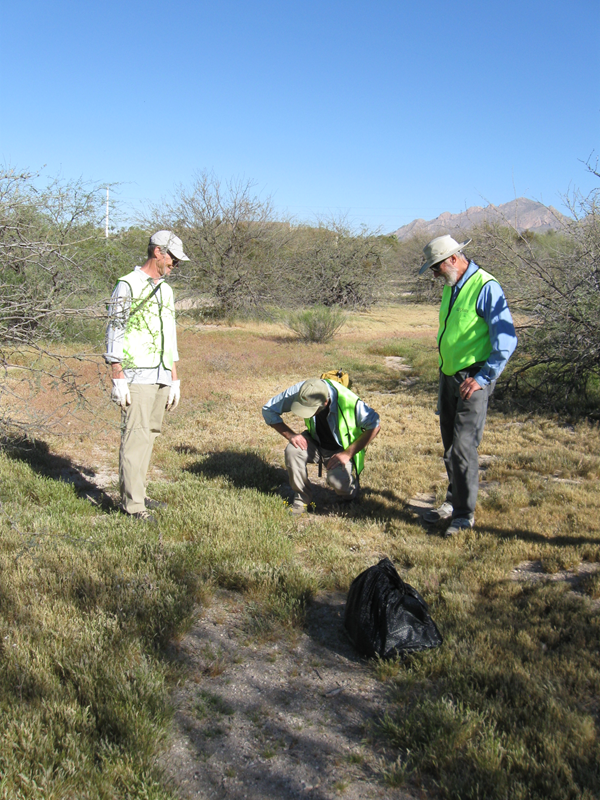
Photo credit: Friends of Rio Vista.
Friends of Rio Vista conservation advisor Gary Bachman has been leading a crew of volunteers in surveys—some systematic and some ad hoc—to identify, record, report, and remove stinknet plants in the park. Here’s a message from Gary about the threat and what you can do about it.
Stinknet (Oncosiphon piluliferum) is an alarming invasive plant that threatens our communities by destroying biodiversity with its aggressive growth, causing fires when the plants dry, and emitting toxic gases when burned.
Several organizations and agencies have allocated resources to fight stinknet. These include the Arizona-Sonora Desert Museum (ASDM), Tucson Bird Alliance (TBA), and the Pima County Cooperative Extension/University of Arizona (Coop Extension). Staff from these institutions have trained Weed Watchers volunteers from Friends of Rio Vista to identify and remove plants from the park. These organizations also are a resource to assist local groups with information and support.
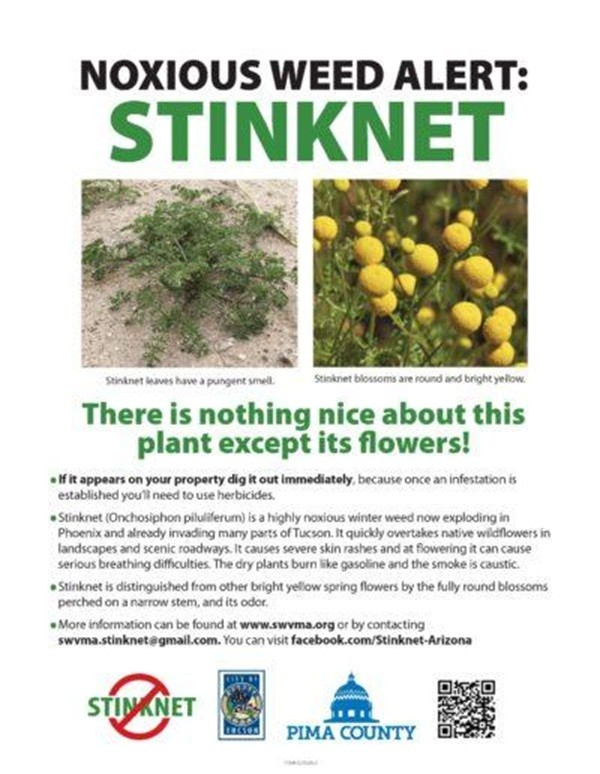
Stinknet is spread through massive numbers of the tiny, sticky seeds that it produces. The plants often appear on roadsides that receive drainage or in yards and parks. It is important for neighbors to help stop potential infestations by checking their land and nearby public areas.
Stinknet can grow in a wide variety of places, including backyards, desert riparian areas, sidewalks, and disturbed or undisturbed soil. Infestations spread rapidly, growing in dense clusters that easily displace native vegetation. Large infestations are extremely difficult to eliminate. Reporting and removing early are essential.
If you find a stinknet plant anywhere (not just in Rio Vista), please photograph it with your cell phone, which will also record its geographic coordinates. Then remove it. Small infestations can be removed by hand, by tugging on the stems and pulling out the whole plant. Wear gloves to protect yourself from stinknet’s volatile oils. You can also use a hula hoe. Once you’ve pulled or dug up the plant, bag it and dispose of it.
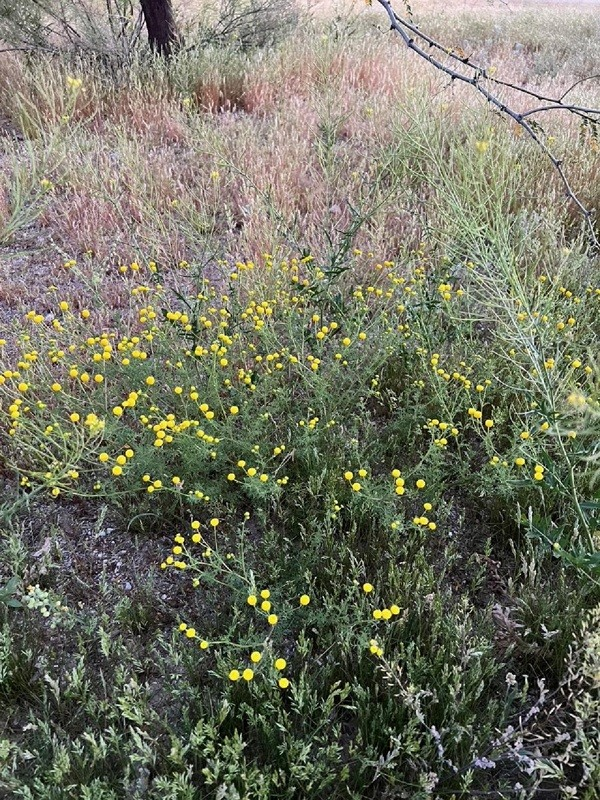
Please report all sightings by uploading your photographic record to the stinknet.org website/database. The website has a map of sightings throughout the region.
Please join Friends of Rio Vista and allies in stopping stinknet in its tracks. Many thanks to our dedicated Weed Watchers volunteers and to our partners at the ASDM, the Coop Extension, and TBA for tackling this menace!
WITH GRATITUDE:
A Welcome Grant for Conservation at Rio Vista
Friends of Rio Vista is honored to be the recipient of a very generous grant from an admirer of the Sonoran Desert, through a donor-advised fund. This is our second grant from this Rio Vista supporter, who wishes to remain anonymous.
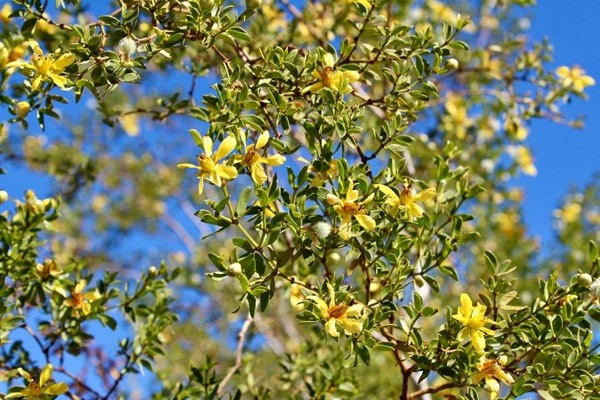
Photo credit: Hannah Sussman.
We could not be more grateful for this grantor’s thoughtful support of our conservation efforts at Rio Vista Natural Resource Park. In 2026, we’re expanding both our programs and our operations, with new volunteers and advisors as well as projects like Friends of Rio Vista Weed Watchers and the Friends of Rio Vista Conservation Plan Project on iNaturalist. Thanks to the timely gift from this anonymous conservationist, our collaboration with Tucson Parks and Recreation can reach even more of the Rio Vista community, human and wild.
The kindness and caring of our grantors and donors inspire us—and paint a brighter future for Rio Vista in these times that often seem dark. Thank you!