
In this issue of Friends of Rio Vista Bulletin, we focus on a new collaboration for science-based conservation at Rio Vista, focused on protecting amphibians and reptiles and their habitats.
Meet Karina Hilliard:
Herpetologist and Conservationist
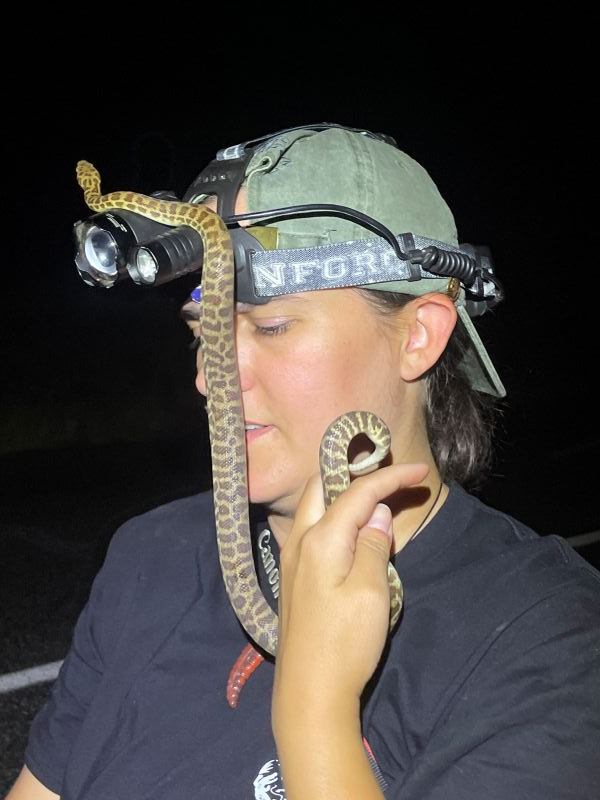
Friends of Rio Vista is grateful for a new partnership with Tucson Herpetological Society (THS), a group that shares our devotion to biodiversity conservation. Recently, Friends asked Robert Villa, THS’s president, for the organization’s help with starting a list of amphibians and reptiles for Rio Vista Natural Resource Park, as a component of a site conservation plan. Robert generously connected us with Karina Hilliard, board member and public outreach representative.
Karina has had a varied and adventurous career that also has been full of service to others, both human and wild. She has been an emergency medical technician and a firefighter. She’s also worked with the Hummingbird Monitoring Network, the Arizona Game and Fish Department, and the U.S. Fish and Wildlife Service. Overseas, she’s contributed to conservation projects in Bangladesh (pythons), Thailand (elephants), Borneo (reforestry), Mexico (jaguars), and Brazil (river dolphins) and has been in search of reptiles and other animals in Costa Rica, Australia, Ireland, England, and Scotland, as well as in Canada and throughout the United States. She’s now a reptile and amphibian keeper at the Arizona-Sonora Desert Museum.
In all her work, Karina strives to educate the public about wildlife, especially reptiles and how to live with them. As soon as we met her, she began putting that dedication to work for Rio Vista.
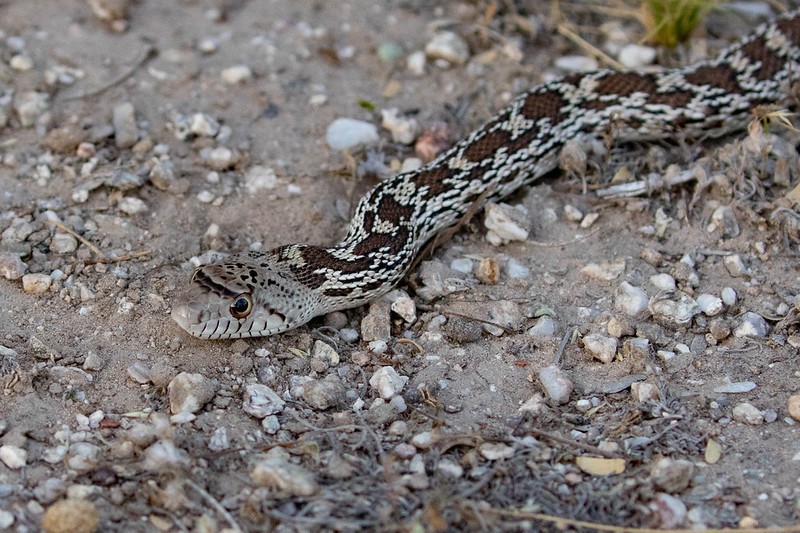
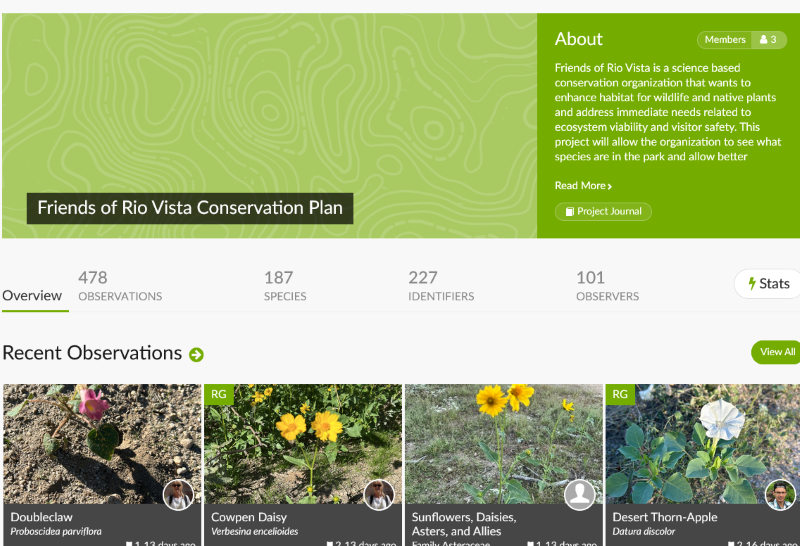
Karina not only created a list of “herps” (as many naturalists refer to amphibians and reptiles) for the park—she also created a whole new digital tool for identifying conservation targets in the management of Rio Vista wildlife, native plants, and their habitats. According to its website, iNaturalist is a “crowdsourced species identification system and an organism recurrence recording tool”—i.e., a way for community scientists and naturalists to compile information on what species are found where. Karina initiated the Friends of Rio Vista Conservation Plan Project on iNaturalist, which brings together observations not only of herps but also of plants and other animals that have been photographed and reported in the park. Combined with documentation of Rio Vista birds on eBird and the Rio Vista plant list produced by the Arizona Native Plant Society, Tucson Chapter, the Friends iNaturalist project is a strong foundation for conservation planning.
But Karina didn’t stop with iNat. She’s also working with Friends of Rio Vista toward the possibility of a nighttime BioBlitz (an intensive field survey involving both professional and community scientists) for herps at Rio Vista. And she’s offered to connect us with City Nature Challenge 2026, a four-day global BioBlitz for urban wildlife.
Last but certainly not least, Karina will be participating in Friends of Rio Vista’s Wild Rio Vista community engagement event on Sunday November 16 (see below). Park visitors will be able to see her and her reptilian and amphibian outreach partners in action.
Thank you so much, Karina! And thanks to Robert Villa for initiating the THS–Friends of Rio Vista partnership!